
Could You Be Afraid of Success, and If So, Why?

Being afraid of success is one of the most common problems that holds people back, along with being afraid of failure.
For most of our lives, especially in our early years we are told to conform – sit down, be quiet, and don’t do anything different to anyone else.
That starts because of (a) the need for parents to have some quiet time and (b) the way the education system is structured.
Our Education System

The common school was started by the British industrialists because they needed the poor people, the workers, to be able to follow instructions and work in the factories.
To understand and obey, they needed at least a basic education. Thus began the three ‘R’s of reading, (w)riting and (a)rithmetic.
That is why our education system is structured so as to teach compliance – the ability to do as you are told and follow the teacher’s instructions. Maverick behaviour, wherein young people challenge the status quo and seek to create and/or innovate is often viewed as disobedience and non-compliance. Thus, that creativity and self-expression is stifled.
Teachers will argue that we need discipline to avoid anarchy, that people need to be trained to follow the rules of society and of course there has to be some of that for our western world to function properly. My disclaimer of course is that there are many great teachers out there, who do their best to do an amazing job, but they too are often hampered by the system.
Shouldn’t the system be designed to help students discover who they are, who they aspire to become, and how to navigate the real world, rather than just achieve qualifications?
The Origins of Compliance
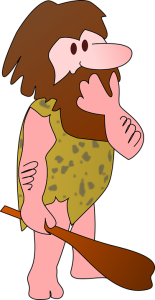
Our compliance behaviour dates right back to our caveman ancestry. If we stray too far from the cave, from the safety of the rest of the tribe, we put ourselves in danger. As human beings, our most fundamental motivational influencer is our need to feel safe and secure. If you were to drop us in a jungle or on a desert island, our first priority is to ensure that we find somewhere safe to shelter or some kind of weapon with which to defend ourselves and to feel safe from the potential threat of wild animals or dangerous creatures. Then we immediately seek out water, because without that we won’t last very long, closely followed by food.
Cavemen understood that the tribe was powerful – there was safety in numbers. People who strayed from the tribe or tried to do things differently were scorned.
Often they were mocked because the other cavemen felt jealous of the courage that the maverick was displaying, courage that they wished they had themselves, so they mocked the maverick. “Who does he think he is?” they’d ask. “Does he think he’s better than all of us?”
Being the maverick was also a challenge to the leader of the tribe, because only he was allowed to take risks for the greater good. So the leader would try to put you back in your place, unless of course he wanted you to be eaten by the wild beast and believed that you would be!
So it is in our DNA to fit in with the tribe and yet we have a creative side to us – one that is bursting to get out.
Whenever we try to use it though, our jealous tribe members will put us back in our place with helpful (not) comments like, “That won’t work?” or “What makes YOU think you can do that?”
We want to be liked. We want to fit in with our families and our tribe.
One of my coaches used to use the example that a man (or woman) born into a family of criminals, thieves and vagabonds will actually feel guilty if he tries to go straight. That guilt, that shame caused by no longer belonging to the family (demonstrated by adhering to their values and behaving just like them) will eventually pull him back into the tribe, unless he is extremely strong-willed.
So we come back to the fundamental issue of our own identity. Who we think we are is the one thing that we will fight ferociously to defend. When you strip a person of their identity, you destroy them.
The Quest to Establish Our Identity

When the Greeks invaded Egypt, they set about chopping off the noses of the statues of the gods. Why didn’t they just destroy the statues you might ask? The Greeks knew that the Egyptians worshipped their gods and their beliefs were a fundamental part of their national identity and culture. They argued that if the Egyptian gods were true gods they would not allow their symbols to be damaged. So they kept the damaged statues around to reinforce the question mark about their real powers.
When you label a person, you are challenging their identity. If they admit to one of their faults by themselves, they now believe it to be true, so that’s ok, but if YOU try to label them with that same fault, they will most likely defend themselves and refute your accusation.
So, little wonder that when we try to (figuratively) step outside the cave, go outside of the safety or comfort zone, the rest of the tribe feel uncomfortable and try to drag us back. Even if we overcome that, we still have that little voice in our head that says, “This probably won’t work. It’s probably dangerous. Who am I to think that I can achieve this? I’m not that special – I’m just like the rest of the tribe.”
So, sadly, just as we were making headway, we allowed the waves of doubt to wash over us and we returned to the safety (the comfort zone) of the tribe, where they welcomed us back, reassuring us that we belonged back in the cave with them. That way they didn’t have to ask themselves why you had dared to be different and they hadn’t.
Identity matters today as much as it always has – this is why Hitler labelled the Jews as ‘rats’ – to dehumanise them, to strip away their true identity, so that the rest of the population could hate them more easily and justify their awful treatment. Trump has followed the same playbook – blaming the country’s problems on the immigrants. Vance even admitted to making up stories about the Haiitian immigrants stealing people’s pets and ‘eating cats and dogs’. This was for the same reason – to strip away that identity and make them the scapegoats and common enemy of the rest of the ‘good and wise’ people. The same tactic is also being used to label all the ‘terrorists’ in Iran. Granted some people from Iran have committed acts of terror, but you can see why the other ‘peace-loving’ people in Iran might view the Americans as ‘terrorists’ for blowing up schools full of children. There’s an old saying that ‘one person’s terrorist is another person’s freedom fighter’.
The point is not to get into a political rant, but to illustrate that ‘identity’ is an individual matter first. To simply label all people of a race, colour or creed with one common adjective or noun is absurd. There are kind people just as much as there are evil people in every nation throughout history. It’s way too easy in this age of spin and misinformation to blindly believe everything you read or watch on the media without applying critical thinking to question the agenda behind the news.
Success Requires Change
Being afraid of failure makes total sense to most people – we don’t want to feel or look stupid, inept, weak or incompetent. But why would we fear success when most people to some degree at least crave more of it?
Because success requires change, and that means stepping outside the comfort zone. Our default is to ‘stay safe’, which means ‘do nothing at all’, or ‘do nothing different!’
Here’s the problem though…
If you carry on doing what you’ve always done, you’ll keep getting the same results you’ve always got!
Einstein said, “You cannot solve a problem with the same mind that created it.” Some suggest he said you’d be insane to expect a different outcome from repeating the same actions, though this never appeared in his notes, so he may have been incorrectly credited with that statement. Nevertheless, the implication of insanity holds true.
Change represents the world outside of the cave. Change represents danger. Change requires us to be comfortable with being uncomfortable. For some of us that pressure overwhelms us. Yet, when we make smaller, more manageable changes, we begin to believe.
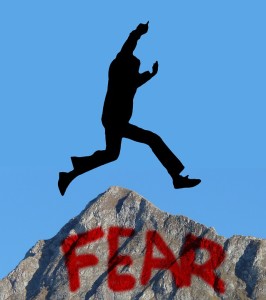
If we venture a few yards further from the cave each day, the tribe doesn’t notice so much and doesn’t feel so threatened. We gain in confidence until one day, we find a new level of comfort and possibly even a new tribe! That doesn’t mean you have to give up all your dear friends in order to succeed, but it may mean you allocate more time to new people on your new wavelength. It will almost certainly involve learning new skills or gaining new knowledge.
When you look in the mirror who do you see? Is it the person you’ve always been; the person everyone else wants you to be; or the person you know you truly are capable of being?
If you need any help with defining your ideal life and overcoming those fears, don’t hesitate to contact me, Tony Inman to set up a time for a chat.
